Credibility/standing as an access-control system

We comfort ourselves with the idea that institutions fail because of an epistemic crisis. We name the problem “misinformation,” “polarization,” or “declining trust.” We assume the core damage is interpretive—that if we could correct the record and provide the ultimate proof, the machine would output the correct result.
But the failures that dismantle lives rarely happen because an institution doesn’t believe you.
They happen because you lack standing.
In the legal sense, standing is the right to have a court hear your case. In the administrative sense, standing is the technical capacity to force a system to metabolize your reality into an obligation—a check written, a hold lifted, a record corrected, a flag removed. It is the difference between a claim that can be acknowledged and a claim that must be acted on.
Most people encounter this distinction not as theory, but as slow humiliation.
You gather receipts. You upload documents. You follow instructions. You stay polite. You escalate through the blessed channels. And still you watch nothing happen. Your claim is not refuted. It is not even denied. It simply never becomes actionable in a way that binds the institution to response.
This is not disbelief. It is nullification.
The non-decision regime
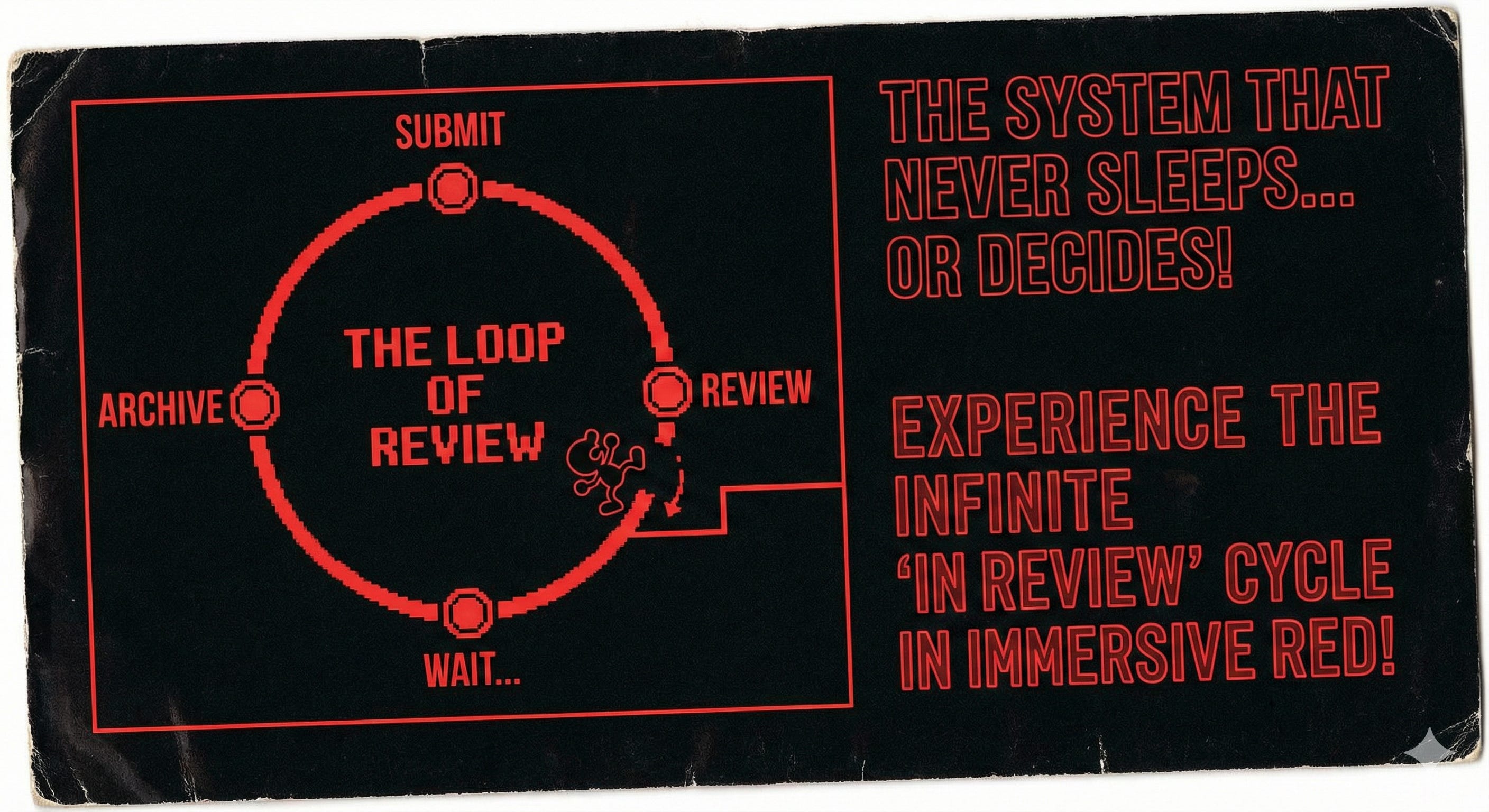
A denial is painful, but it is legible. It produces a decision artifact: a reason, a timestamp, a deadline, a path to review. “Pending” dissolves the handle. It sounds temporary. It sounds like progress. It keeps you checking, resubmitting, waiting—participating in a process that never commits.
Non-decision is the signature move of modern institutional failure: consequences without a decision. We call it bureaucracy, red tape, inefficiency. Those words flatter the machine. They imply justice exists underneath, and the pipe is merely clogged.
But in more and more domains, the pipe is the policy.
Modern institutions have learned to govern by controlling contestability: accepting input while avoiding being bound. They will generate reference numbers and case IDs. They will route you through portals that can ingest you. But they will not necessarily offer the one thing that turns “listening” into justice: a contestable decision that creates a record, triggers duties, and can be appealed.
The incentive structure is simple: Decisions create records. Records create contestability. Contestability creates exposure. Delay manages exposure.
And “pending” recruits your cooperation. It sounds provisional, so you keep participating—resubmitting documents, waiting on hold, reorganizing your life around a process that never commits. Non-decision is not merely a lack of action. It is a stable state that extracts compliance.
You aren’t screaming into a void. You are screaming into a buffer designed to keep you alive enough to stop escalating—designed to metabolize your claim into “handled” without ever allowing it to become binding.
The pipe is the policy
Governance has migrated out of courts and into workflows: submit a ticket, upload documentation, wrong channel, missed window, unable to verify, case closed. Rights do not exist as abstractions. They exist as successful traversal through a sequence of gates.
Each gate has a cost—time, literacy, documentation, connectivity, stable identifiers. When traversal costs are high, identical treatment at the interface still yields stratified results. Some people can pay the costs. Others can’t. Inequality is laundered through friction.
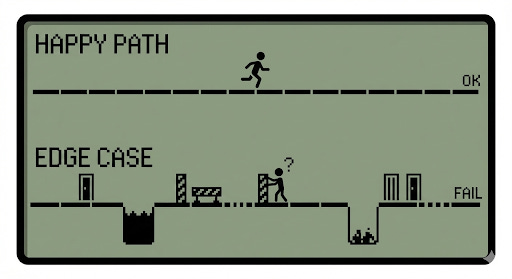
This is where the concept of the Happy Path becomes a machine for inequality. In systems design, the Happy Path is the default journey where no exceptions occur. But it’s a temporary status, not a permanent identity. One divorce, one fire, one eviction, one name mismatch is enough to convert you from a “user” into an edge case.
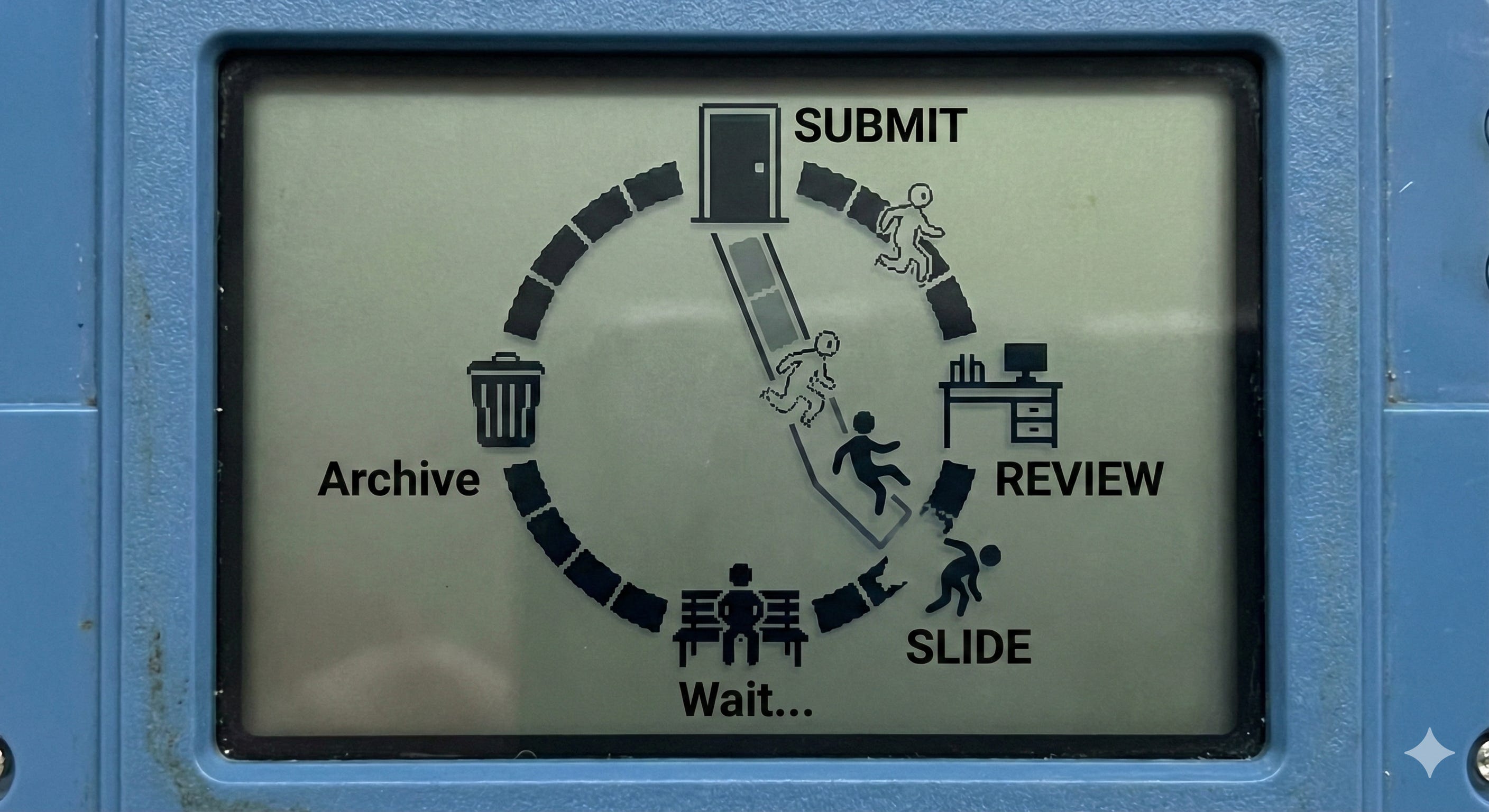
And the pipe treats edge cases as risk. Risk triggers friction. Friction produces delay. Delay produces drop-off. Drop-off is recorded as “resolved.”

Admissibility vs. truth
This is why contemporary injustice so often feels like unreality. You can be right and still lose. You can have the receipts and still fail.
Because what is being adjudicated is not truth. It is admissibility.
To understand standing, separate two questions we usually conflate:
Admissibility is what parses—what can be represented as an object in the system. Forms, fields, identity rails, time windows, evidence formats. The institution often doesn’t begin with “is this true?” but with “does this parse?” What cannot be represented cannot be decided.
Standing is what binds—what can force the system to produce a contestable disposition. You can be admissible—logged, routed, assigned a case ID—and still have no standing. You can be “in review” forever.
You can be 100% factually correct, holding physical proof in your hands, and still be functionally wrong because the system cannot ingest the format of your truth. The governing question flips from “Is this true?” to “Is this processable?”
Standing as an asset class
If standing is what makes reality contestable, then standing is a distributive resource. And because it is scarce, it behaves like an asset class.
When the ability to make a system bind is rationed, it becomes purchasable—not by bribing a clerk, but by buying legibility.
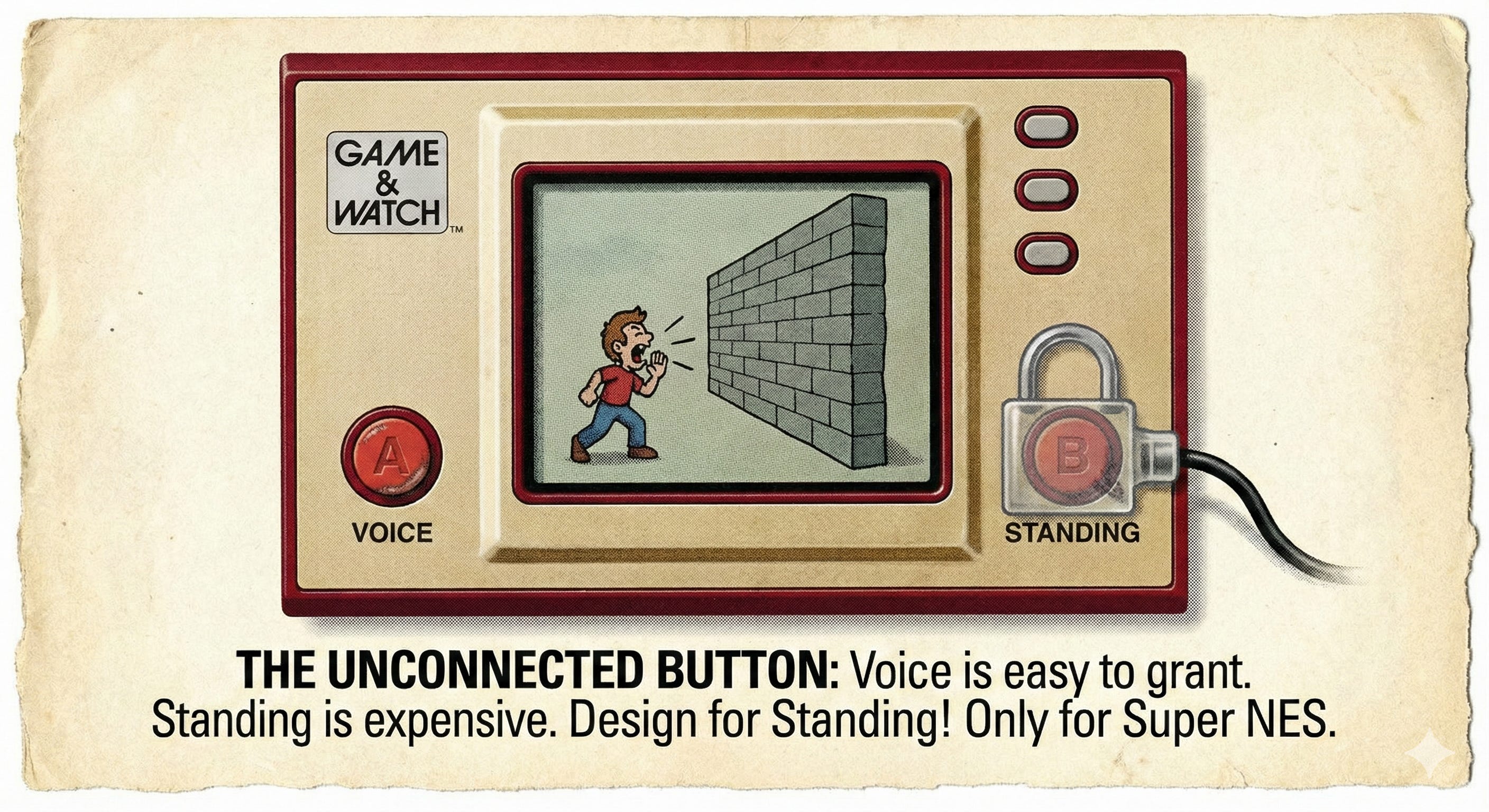
The wealthy do not only get better outcomes. They get more situations in which a wrong can be recognized as wrong, because they hold the portfolio of assets required to force the machine to bind: time to persist through latency, stable identifiers that satisfy proof regimes without triggering fraud flags, documentation continuity that prevents mismatch errors, and intermediaries whose job is to translate messy life into admissible packets.
This asset class compounds. Stable paperwork means fewer mismatches, fewer flags, and easier future standing. Precarity compounds the other way: volatility produces flags, flags produce gates, gates produce drop-off.
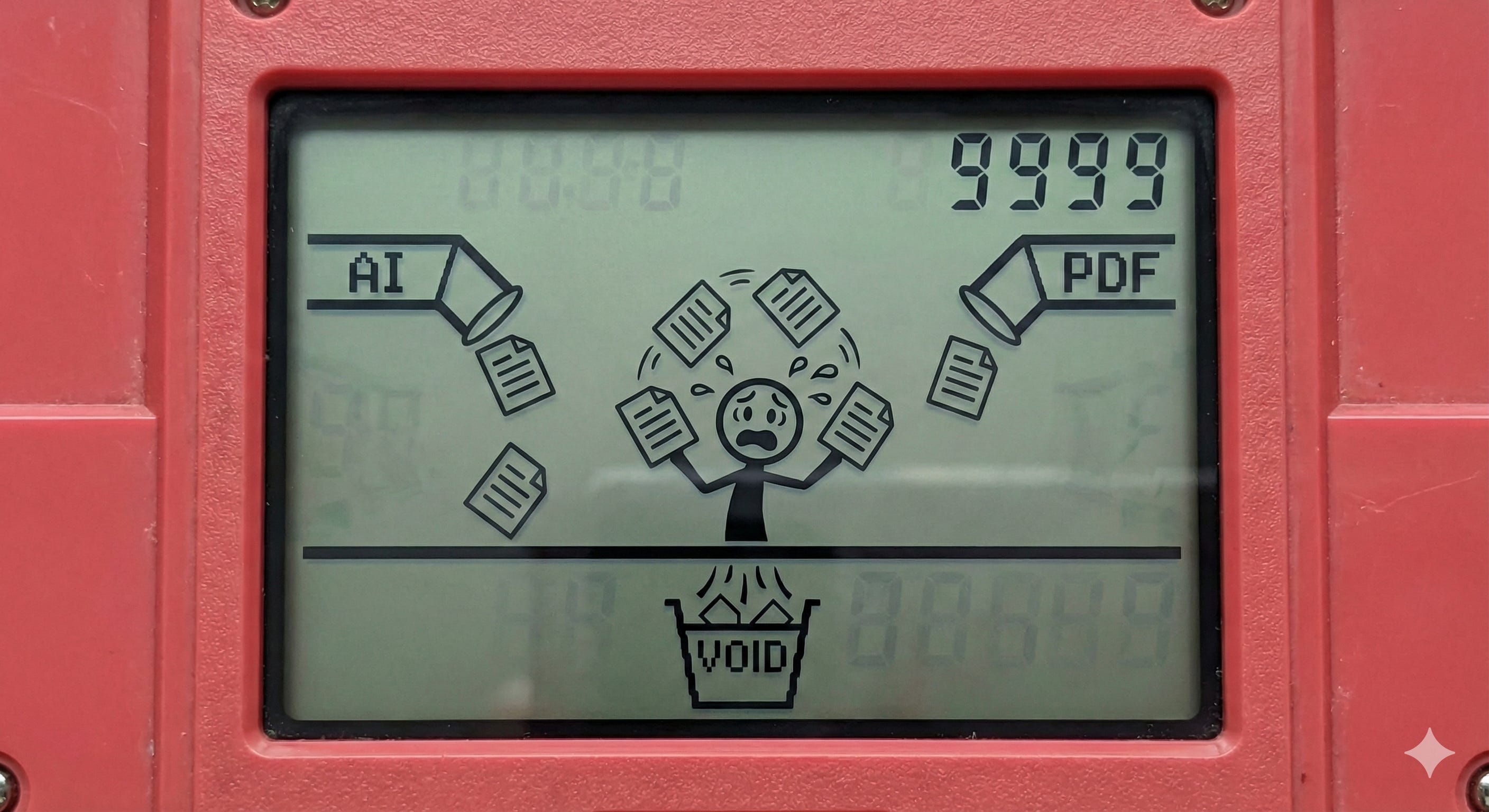
The precarious face the raw interface. They guess what the machine wants. They burn hours they don’t have. And when they finally drop, the institution records the outcome as “compliance failure”—as if endurance under administrative coercion were a character trait.
Contestability by design
If the problem were mainly misinformation, the remedy would be better information. But if the problem is standing—systems that accept inputs without incurring obligation—then the remedy is constraints.
At minimum, any institution with the power to materially affect a person’s life should be required to output a decision artifact within a bounded window. Call it a Decision Guarantee:
Start the clock when input is accepted—and make it visible.
Bound latency. “Pending” cannot persist beyond a fixed window.
Forbid ghost closure. No case ends without a disposition artifact.
Within that window, the institution must output one of three states: Approve, Deny (with reasons and appeal path), or Request specific information (with exactly what is needed, a deadline, and a commitment to decide after).
Then ask of any system that governs you—benefits, credit, housing, employment, health care—not “do they listen?” but: What counts as admissible input? What artifacts create standing? When does the clock start? Can they close without deciding?
These questions sound technical because they are. Power lives in parsers, permissions, and queues.
The crisis is not only that the system doesn’t know you’re right. It’s that it hasn’t been forced to bind.