Optimizing the User
Resilience is a subsidy we pay to cover the cost of structural failure

In the current discourse of work and technology, “resilience” is the ultimate virtue. We celebrate the doctor who powers through a clunky EHR, the pilot who manages a chaotic dashboard, and the citizen who navigates a labyrinthine benefits portal.
We have built an entire industry of thought leadership—spanning management theory, psychology, and tech design—dedicated to making the human operator tougher, faster, and more adaptable.
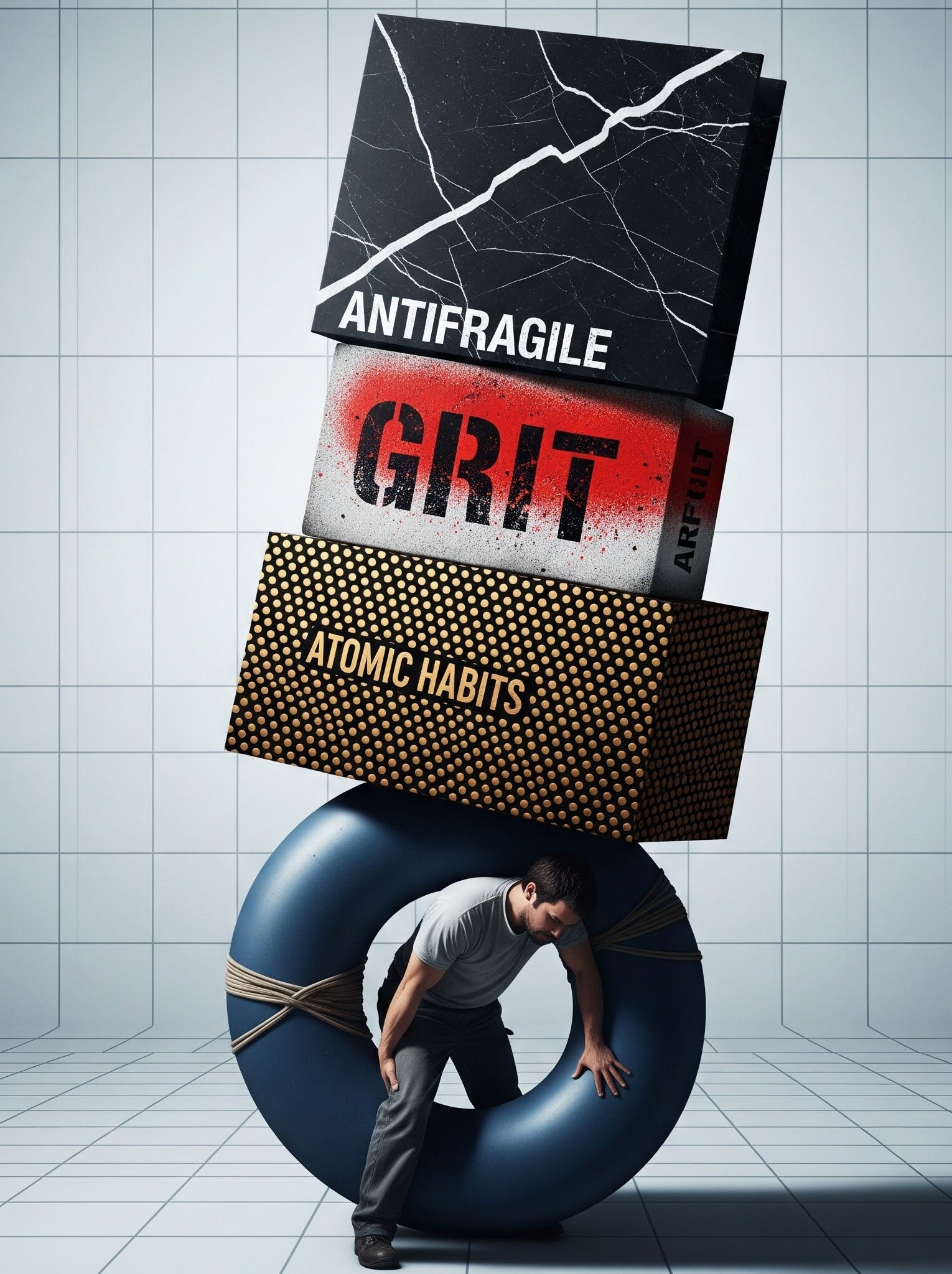
But viewed through the lens of Industrial Hygiene, this obsession with resilience is not a solution; it is a symptom of structural failure.
Resilience is a subsidy. It is a tax the user pays to cover the cost of lazy engineering.
When a system fails to resolve ambiguity, manage memory, or handle errors, it doesn’t just stop working. It borrows stability from the user. The user supplies the memory, the patience, and the metabolic energy to bridge the gap. This is not a character trait; it is a resource transfer. Institutions are balancing their books by burning your nervous system.
To build truly safe systems, we must dismantle the five dominant myths that allow institutions to offload their maintenance costs onto us.
Myth 1: The Myth of “Grit”
The Intellectual Source: Angela Duckworth (Grit).
The Thesis: Perseverance and passion for long-term goals are the primary predictors of success.
My Critique:
Grit is a valid virtue for intrinsic pursuits (learning the violin, training for a marathon). It is a toxic metric for extrinsic friction (navigating a billing code).
When we demand “grit” from a nurse struggling with a medication dispenser, we are committing a category error. We are treating a Logistical Bottleneck as a Character Test. The “grit” required to endure bad software is not a sign of high character; it is a sign of high Failure Demand. Every ounce of grit spent fighting the interface is a tax paid on behalf of a vendor who didn’t finish the design.
Myth 2: The Myth of “Antifragility”
The Intellectual Source: Nassim Taleb (Antifragile).
The Thesis: Systems (and organisms) benefit from shocks and disorder; they should get stronger under stress.
My Critique:
Taleb’s physics apply to evolutionary systems, not administrative ones. A muscle grows when torn; a distinct cognitive process degrades when fragmented.
Administrative burden follows the laws of thermodynamics, not biology. It creates Entropy (waste heat), not Hypertrophy (growth). When a user faces high-frequency interruptions, they do not become “antifragile”; they become cognitively insolvent. Applying this logic to UX justifies negligence by framing burnout as a failure to adapt to chaos.
Myth 3: The Myth of “Atomic Habits”
The Intellectual Source: James Clear (Atomic Habits), Charles Duhigg.
The Thesis: You do not rise to the level of your goals; you fall to the level of your systems. Optimization comes from personal habit stacking.
My Critique:
This is true for the individual, but false for the operator of a hostile system. You cannot “habit stack” your way out of a Coercive Architecture.
If an algorithm is designed to interrupt you every 11 minutes (the average for hospital staff), no amount of personal discipline can maintain a flow state. The Institutional System (the alerts) always overwhelms the Personal System (the habits). Suggesting that a user can “optimize” their way through toxic infrastructure is a form of gaslighting that obscures the structural deficit.
Myth 4: The Myth of the “Growth Mindset”
The Intellectual Source: Carol Dweck (Mindset).
The Thesis: Abilities can be developed. Failure is just a learning opportunity.
My Critique:
The “Growth Mindset” presumes a rational environment where inputs yield outputs. But modern bureaucracy functions as “Sludge” (Cass Sunstein)—friction designed to be irrational and opaque.
Navigating a broken system acts as a Regressive Tax. It requires surplus resources (time, literacy, emotional reserve) that vulnerable users do not have. To tell a user who has hit a dead-end in a benefits portal to “adopt a growth mindset” is to ignore the material reality of the barrier. The barrier isn’t a learning opportunity; it’s a locked door.
Myth 5: The Myth of the “MVP” (Minimum Viable Product)
The Intellectual Source: Eric Ries (The Lean Startup), Agile Orthodoxy.
The Thesis: Move fast, ship early, and iterate based on user feedback.
My Critique:
In safety-critical environments, the MVP often functions as a Maximum Liability Product.
“Shipping to learn” creates a moral hazard where the cost of Quality Assurance (QA) is externalized onto the user. If the interface is confusing or the workflow is buggy, the user pays for the company’s “learning” with their own time, errors, and stress. It is a direct subsidy: the vendor saves money on testing, and the user pays for it in burnout.
Rejecting the Tax
If a bridge requires a driver to be a stuntman to cross it safely, we do not start a training program for “Resilient Driving.” We fix the bridge.
Yet in the digital world, we have accepted the stuntman standard. We have accepted that our tools will be hostile, extracting, and broken, and that it is our job to be tough enough to survive them.
We must stop paying this tax.
The goal of design is not to build a user who can endure the friction.
The goal is to build a system that does not require endurance to use.